0
Items
$0.00

Dark Mode
 Blogs
Blogs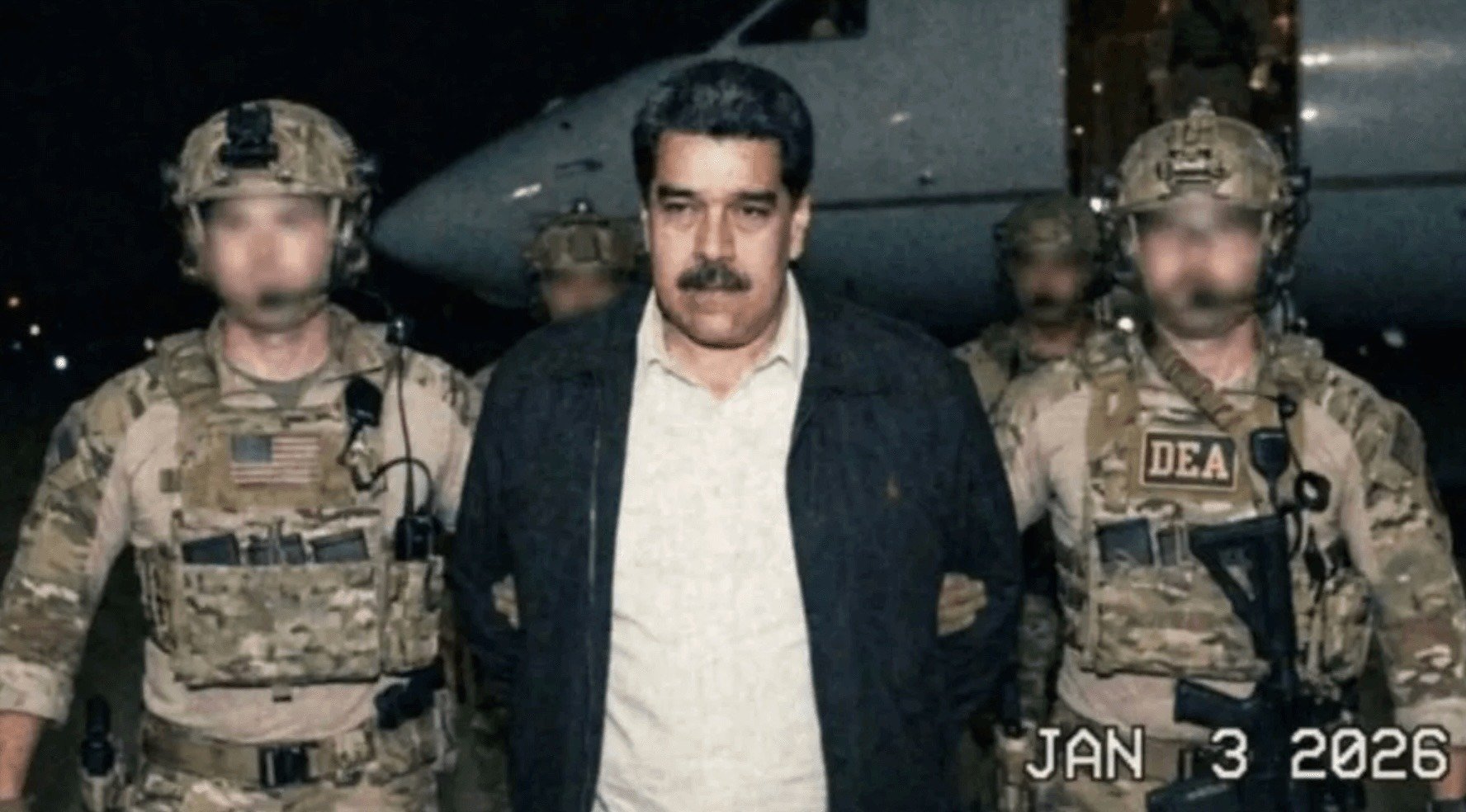
In a stunning escalation of U.S.–Venezuela tensions, the United States launched coordinated air strikes across northern Venezuela in the early hours of January 3, 2026, with explosions reported in and around Caracas and nearby states.
According to U.S. President Donald Trump, the strikes were designed to target strategic military sites and culminated in the capture of Venezuelan President Nicolás Maduro and his wife, Cilia Flores. Trump said both were “captured and flown out of the country,” and face criminal charges in the United States, including narcoterrorism and illegal drug trafficking.
Explosions and low-flying aircraft were reported around 2:00 a.m. local time in Caracas.
U.S. forces — reportedly including elite Delta Force units — executed the operation, described by U.S. officials as “large-scale.”
Maduro and Flores were extracted and are expected to be brought to the U.S. to face charges, according to top U.S. officials.
Venezuelan authorities declared a state of emergency, mobilizing defense plans and urging citizens into the streets in protest.
This marks one of the most dramatic U.S. military actions in Latin America in decades — the first foreign removal of a sitting Latin American leader since the U.S. invasion of Panama in 1989.
The Trump administration has spent months accusing Maduro’s government of narcoterrorism, corruption and illegitimate rule. In 2020, Maduro was indicted in U.S. courts on drug-related charges — allegations his government has always denied.
U.S. officials argue the military action was necessary to enforce the indictment and disrupt an alleged drug-trafficking network tied to the Venezuelan regime.
The Venezuelan government has denounced the attacks as “military aggression” and an imperialist assault on national sovereignty. Vice President Delcy Rodríguez has demanded proof of life for Maduro and Flores, questioning the legality and humanitarian impact of the operation.
Reports out of Caracas indicate civilian injuries and fatalities, though casualty figures remain unverified as authorities struggle to account for the chaos that followed the strikes.
The incident has rattled the global community:
Latin American leaders are divided — some condemning the U.S. actions as a dangerous breach of international law, while others cautiously back change in Venezuela’s leadership.
Countries like Cuba and Russia have sharply criticized the operation, calling for explanations of Maduro’s whereabouts and demanding his release.
European officials have urged restraint and respect for international norms as the situation continues to unfold.
With Maduro’s reported removal from power, Venezuela enters uncharted political territory:
The constitution designates Vice President Delcy Rodríguez as interim president, but the legitimacy of any transitional authority is hotly contested.
Questions loom over the future of Venezuela’s oil industry, which has already been constrained by U.S. sanctions and actions targeting shipping.
The legality of U.S. military action without congressional approval has already triggered political and legal debate in Washington.
Bottom line: What began as a strike against narcotrafficking has exploded into a geopolitical earthquake, reshaping U.S.–Latin America relations and potentially rewriting the future of Venezuelan governance.
Did you like this article?
Did you like this article?
Team USA survived a tense battle against the powerful Dominican Republic national baseball team, winning 2–1 in the semifinals of the World Baseball Classic to advance to the championship game. The game’s decisive moment came in the fourth inning when Gunnar Henderson...
Feid is taking the next step in his career, officially launching his own record label, Grabaciones Los Poderosos, Billboard has confirmed. The new label will operate under a distribution partnership with Universal Music Latin Entertainment. Through the venture, Feid...
The highly anticipated Finalissima 2026 between Spain national football team and Argentina national football team has officially been cancelled, according to UEFA. The match, scheduled for March 27 in Doha, Qatar, was meant to bring together the winners of UEFA Euro...

Venezuela national baseball team delivered one of the biggest moments of the World Baseball Classic, defeating reigning champion Japan national baseball team 8–5 in a thrilling quarterfinal matchup...
For Catalina Mendoza, age is no barrier to learning. At 91 years old, she has enrolled in school for the very first time, beginning first grade in El Salvador as part of a national education...
Miguel Díaz-Canel confirmed that Cuba is currently holding talks with the United States over potential solutions to the long-standing tensions between the two countries. The announcement signals...


0 Comments